
14 oct, 2025
What to see in and around the Irati forest: must-sees
Looking for the green heart of the Pyrenees? Enter the Irati forest and discover a paradise of beech and fir trees, waterfalls, viewpoints and picture-postcard villages. Nature, history and unique routes await you in the Navarrese Pyrenees.
BlogThe Irati forest is one of those places you’ll never forget. An immense, almost magical forest with centuries of history in its depths and a biodiversity that makes it a true nature sanctuary.
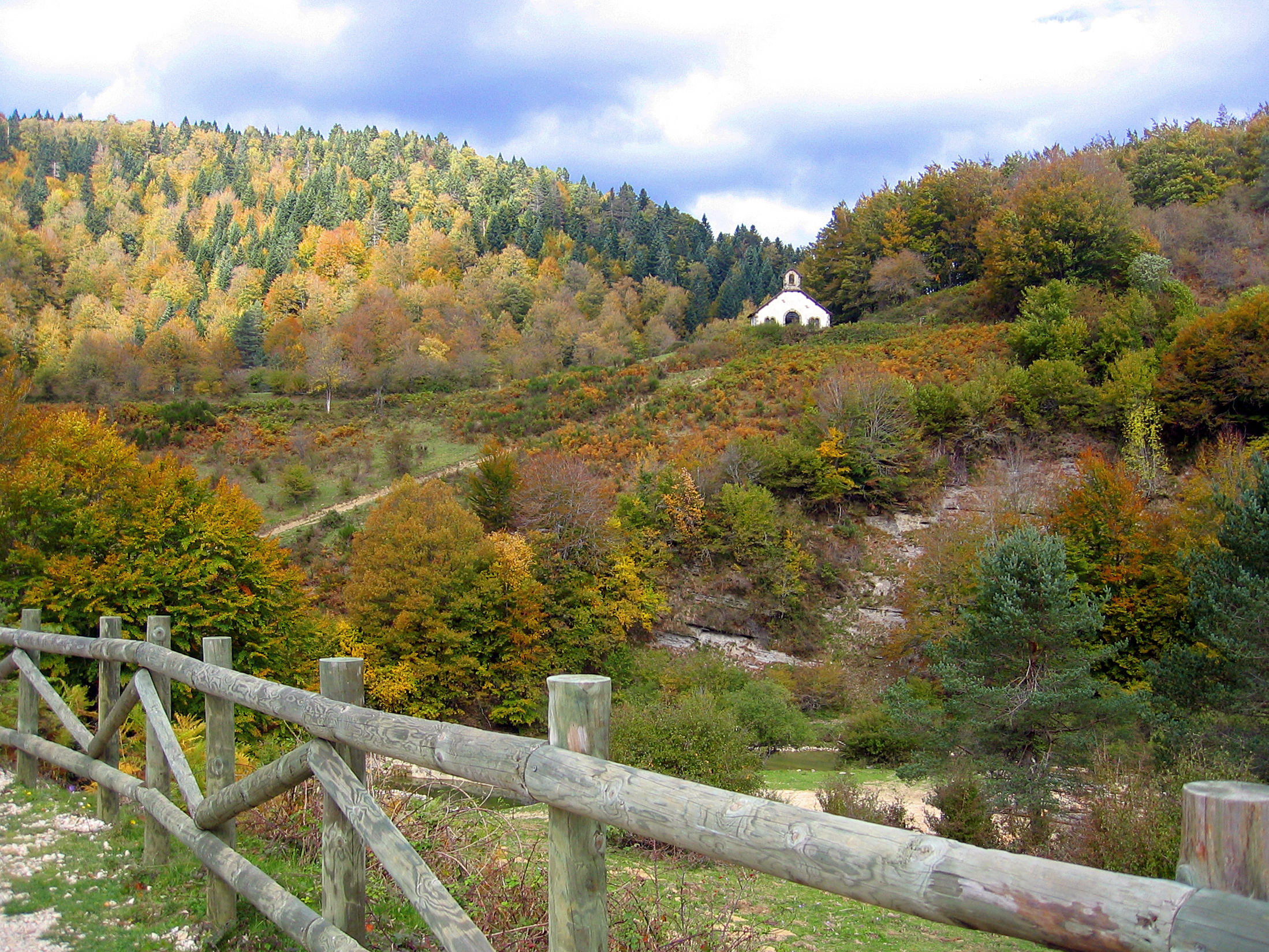
With more than 17,000 hectares of beech and fir trees, it’s the second largest and best preserved forest in Europe, only after Germany’s Black forest. Since 2007, it has been part of the Ancient and Primeval Beech Forests of the Carpathians and Other Regions of Europe, declared a World Heritage Site by UNESCO, and in 2024 it was given Biosphere Reserve status.
Although beech trees are the stars of the show, oaks, birch trees, willows and giant firs also grow here. They’re home to birds of prey, foxes, red deer, roe deer and even the elusive woodpecker, which has all but disappeared on the rest of the Iberian peninsula. With such natural wealth, it’s no wonder it’s a Special Protection Area (SPA).
But the Irati forest is much more than just a forest: it’s a place where the force of nature thrives and tradition lives alongside legend. If you’re thinking of paying it a visit, here’s a complete guide featuring all the places you shouldn’t miss, picture-postcard villages you should visit, spectacular viewpoints from which to admire the landscape and walks you can take depending on what you’re after.
Must-see places in and around the Irati forest
-
Irabia reservoir, the blue heart of the forest
In the heart of Irati lies a body of water that’s like something out of a fairytale: the Irabia reservoir. Hidden in amongst a large expanse of ancient woodland, it’s one of the most photographed places in the area thanks to its great beauty. The reflection of the forest in its calm waters changes with each season, creating a landscape that’s never the same.
There you can take a circular route around the reservoir. It’s about 10 kilometres long, is classified as easy/medium difficulty (suitable for families) and takes about 3 hours to complete.
The nearest place to the reservoir you can get to by car is via Orbaizeta. A forest upkeep fee is charged for parking.
-
The El Cubo waterfall, a magical place of connection
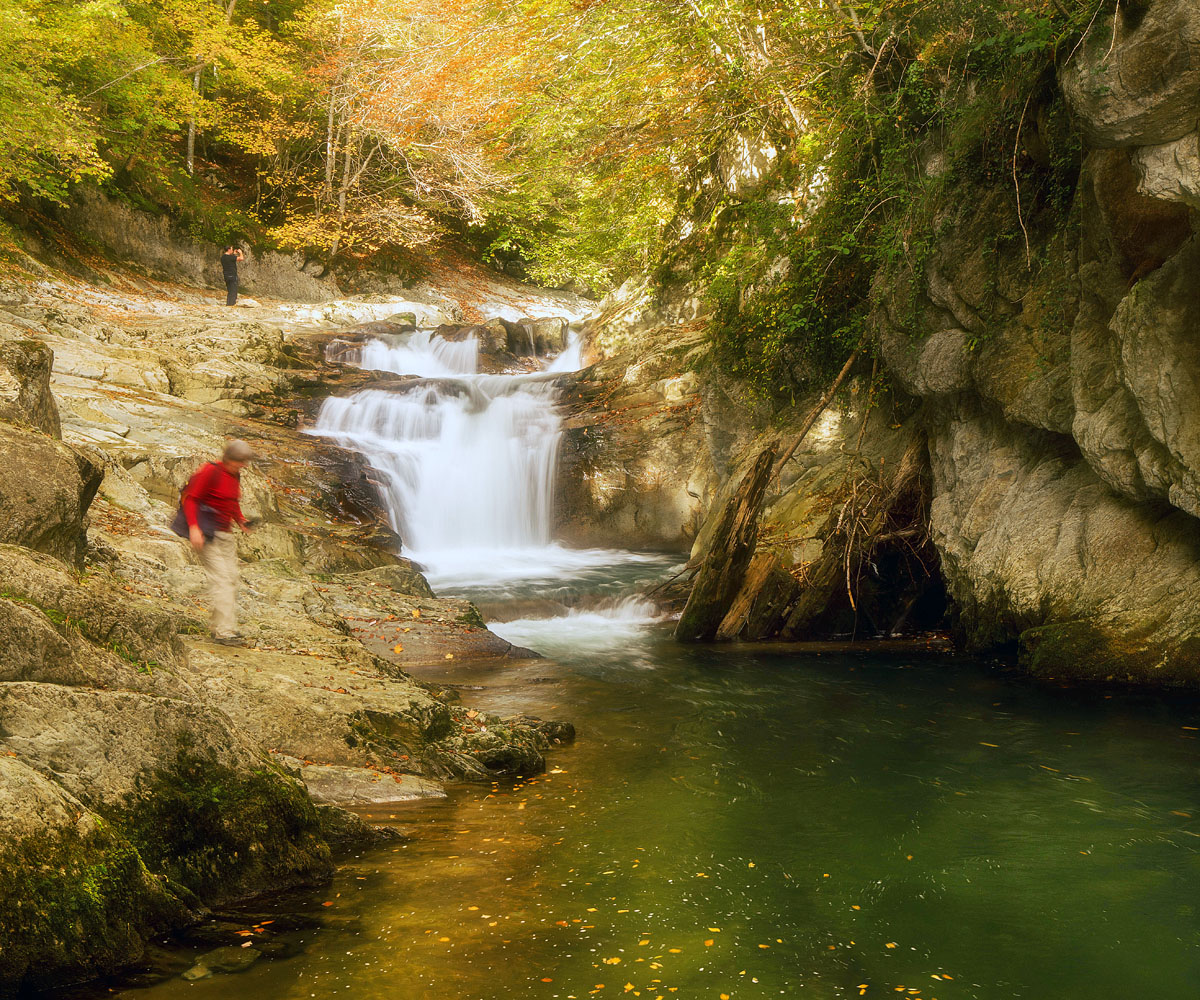
One of the most surprising spots in Irati is the El Cubo waterfall, a staircase waterfall that breaks the silence of the forest.
You can get there on the Errekaidorra interpretive trail, a well signposted circular route some 10 km long which begins at Casas de Irati. On the way, there are panels explaining how the forest in the area is exploited and how charcoal burners and smugglers left their mark on it in the past. Ideal if you want to combine nature, history and a little bit of adventure.
-
Orbaizeta royal arms factory, history among ruins
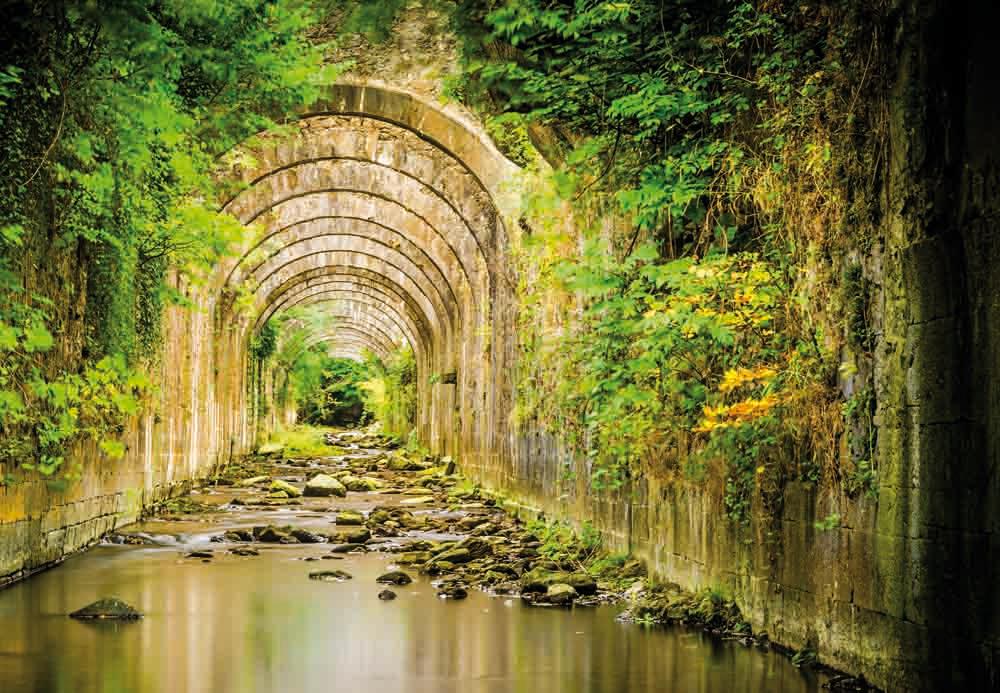
Declared a Site of Cultural Interest in 2008, the Orbaizeta royal arms factory is one of those places where history mingles with nature. Founded in the 15th century as a foundry by order of Blanche I of Navarre and converted into a royal factory by Charles III in the 18th century, it was one of the main military facilities in Spain until it was closed in 1884.
A route to the Urkulu tower, a round Roman tropaion tower located on top of the mountain of the same name, starts there.
Viewpoints and panoramic views of the Irati Forest
● Zamariain viewpoint, the Lion King stone
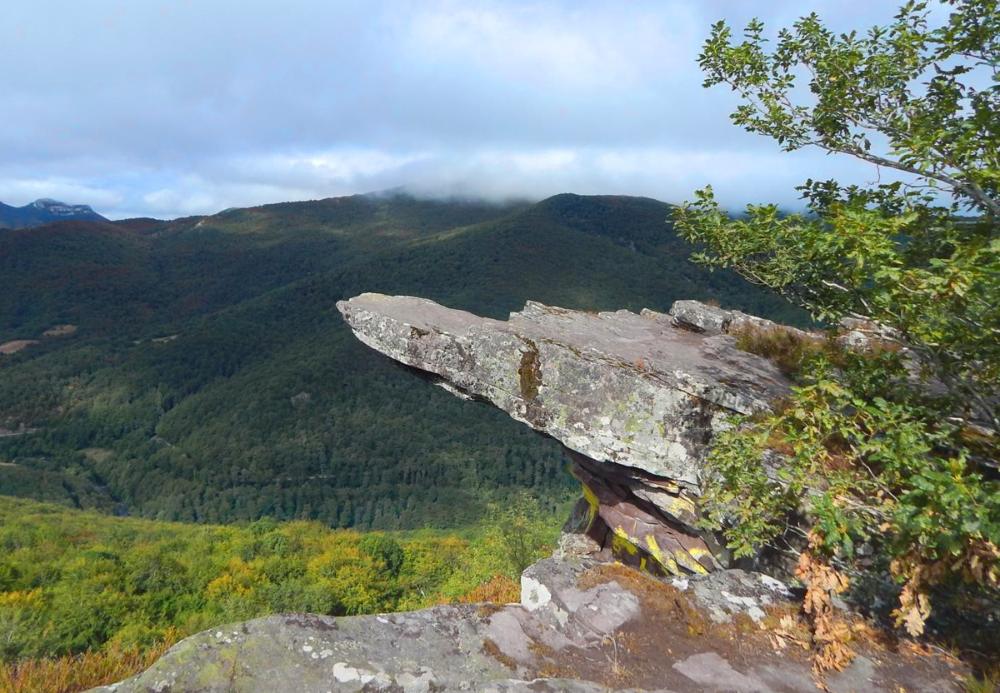
If you're looking for a unique view, take note of the Zamariain viewpoint near Garaioa. This natural balcony offers views of the Betelu oak forest and Irati river.
The viewpoint has become quite famous in recent years on social networks like Instagram, as its protruding rock is reminiscent of the famous stone in The Lion King.
There are two ways to get there:
- If hiking’s your thing, you can take the 3-km signposted route from Garaioa, with a climb that takes about an hour.
- If you’re going with kids, we recommend driving up the track from Garaioa to a small parking area. From there, you can walk to the viewpoint in about 20 minutes. Last stretch of the SL-NA 58A local trail from Garaioa to the Zamariain viewpoint.
-
Ariztokia viewpoint, between Garralda and Aribe
Ariztokia, which means "place of oaks", is a good viewpoint from which to see the Betelu oak forest and the Irati River as it meanders between mountains.
It’s easy to reach. There’s a sign for the viewpoint on the road between Garralda and Aribe, and a small parking area from which a path about 100 metres long to the viewpoint starts.
-
Panoramic views from Alto de Tapla: Idorrokia and Goñiburu
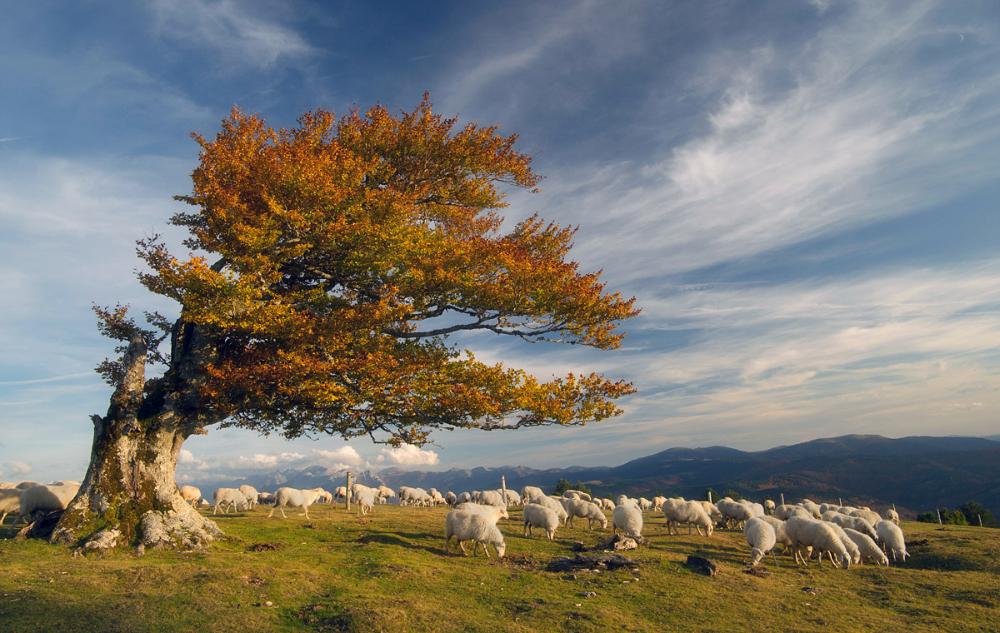
Alto de Tapla, another natural balcony overlooking the Irati forest, is on the road between Ochagavía and Larrau (France). From there, you can admire the beech-fir forest in all its magnitude. On clear days, peaks such as Idorrokia and Goñiburu can be made out. If you’re up for climbing them, the views are even more spectacular.
Tapla is also the starting point for routes to the Abodi plateau, a perfect place for mountain biking and hiking.
-
Balcón del Pirineo viewpoint in Abaurrea Alta
The viewpoint is just as you leave the village on the way to the Salazar valley. From there you can enjoy one of the most spectacular views of the Navarrese Pyrenees, with part of the Aragonese Pyrenees in the background. Nearby meadows frame the scene, vibrant green in spring and covered by a blanket of snow in winter. There’s an interpretation board to help you identify the places you can see.
Quaint villages near the Irati forest
-
Ochagavía, one of the prettiest villages in Navarre
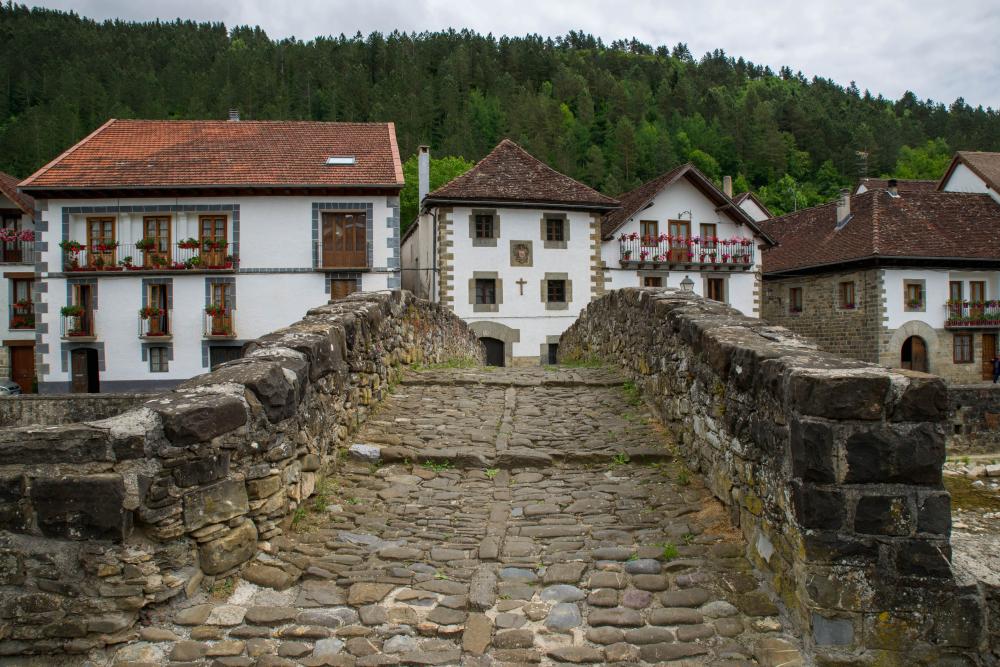
Ochagavía in the Salazar valley is considered one of the most picturesque villages in Navarre. Its cobblestone streets, stone houses with balconies bedecked with flowers and the mediaeval bridge over the Anduña river create a picture-postcard image.
The name Ochagavía comes from the Basque otsoa (wolf) and kabia (nest), meaning "wolf's nest"; a clue to its wild past. You can learn more about the wildlife in this living nature reserve at its Nature interpretation centre.
Strolling through its streets, you can discover palaces such as those of the Urrutia, Iriarte and Donamaría families, and the Church of San Juan Evangelista.
It’s well worth going up to the Sanctuary of Nuestra Señora de Muskilda, which contains a carving of the Virgin with child associated with local legends. And if you visit the village in late summer, you can literally travel back in time with Orhipean, a festival in which traditional life from 100 years ago is re-enacted.
-
Orbaizeta, between industry and megalithic history
In addition to the Royal arms factory, Orbaizeta stands out for its proximity to the Azpegi megalithic site with its prehistoric cromlechs to remind us that the area was already inhabited thousands of years ago.
Nearby, on the border with France, stands the Organbide cromlech, a must-see if you’re fascinated by ancient stone formations and their inscriptions.
And if you want to continue discovering incredible places, from there you can head for the Arpea cave.
Finally, you have the option of taking guided e-bike tours of the Orbaizeta arms factory, Orbaizeta, the Aezkoa valley and the Irati forest.
-
Aribe and its suspended footbridge over the Irati
Aribe, a small village in the Aezkoa valley, is a must-see for its Roman stone bridge and suspended footbridge over the Irati river, ideal for adventurous families.
This village is home to the spa where Ernest Hemingway spent time after enjoying the San Fermín festival. A charming place with a lot of history.
-
Abaurrea Alta and the Stelae museum
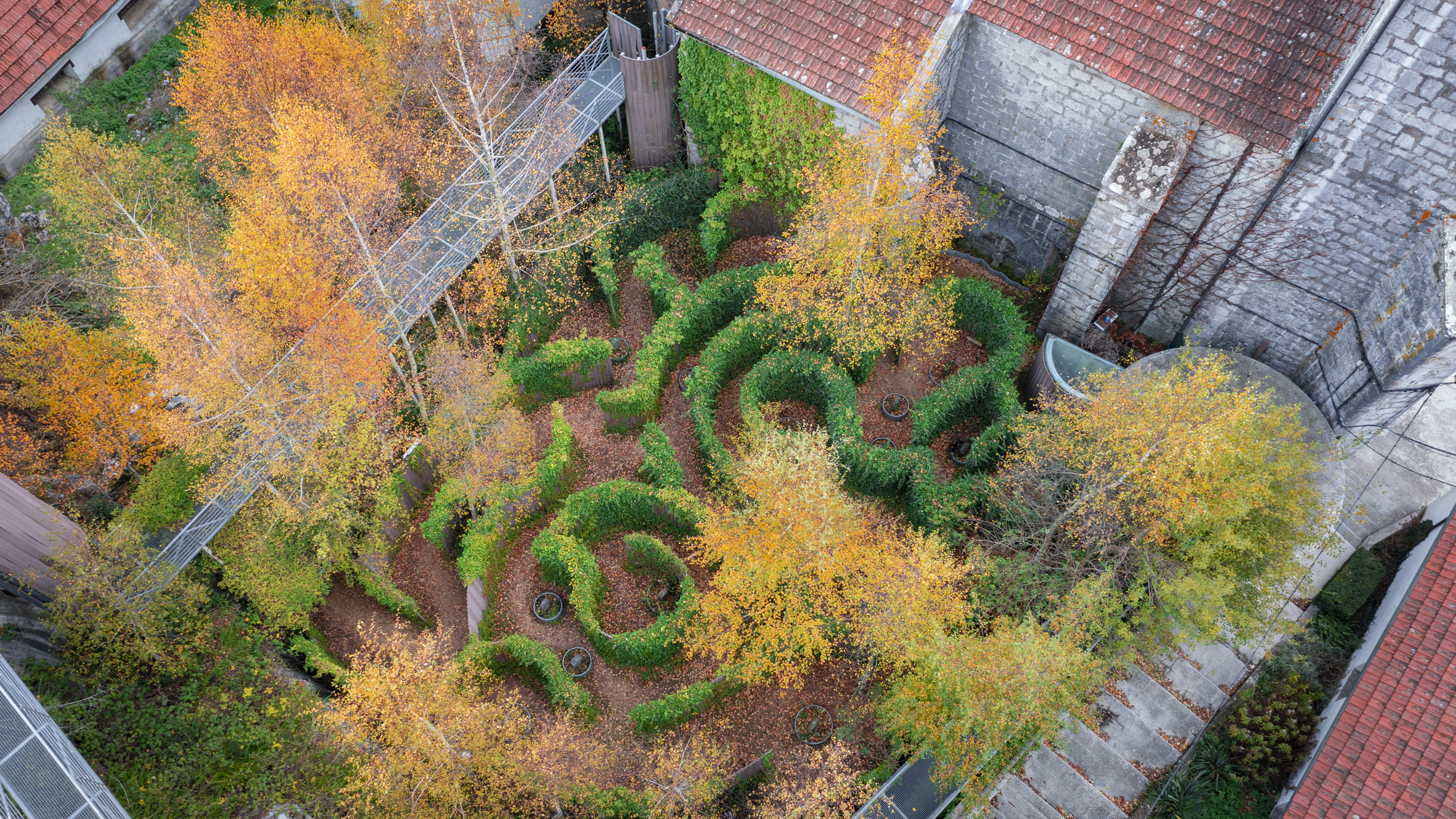
Known as "the balcony of the Pyrenees" for its views, Abaurrea Alta is the highest village in Navarre. And it also has a Stelae museum, an outdoor garden with dozens of funeral stelae of mediaeval origin. A guided tour is highly recommended.
The granaries of the Aezkoa valley, guardians of tradition
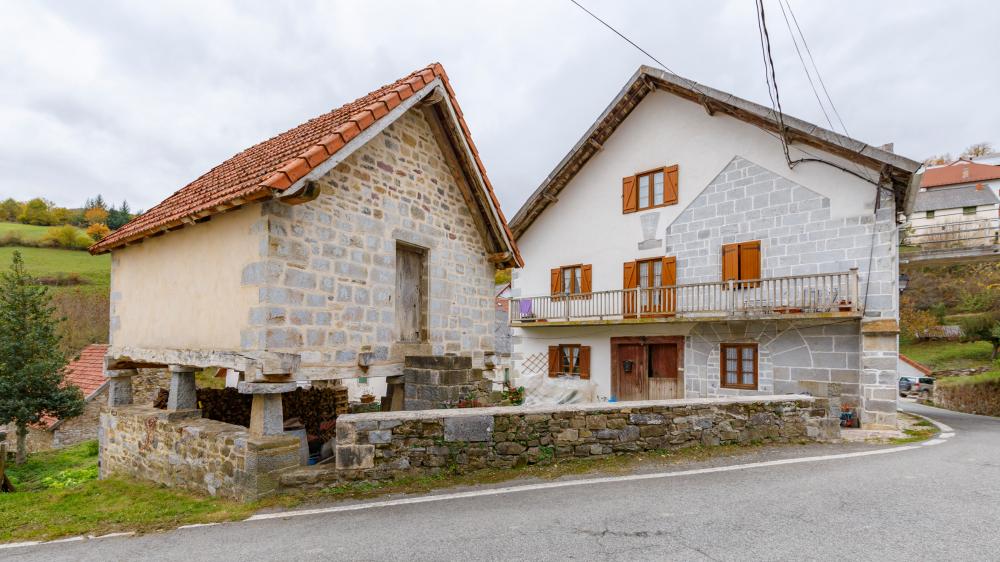
The Aezkoa Valley is home to 15 of the 22 Pyrenean granaries still standing in Navarre. These constructions, which have rectangular bases and gabled roofs, and are raised on pillars with circular stones on top to prevent rodents from getting in, were essential to keep the villagers’ grain safe.
The best examples are in Villanueva de Aezkoa, but you can also find some in Aria, Orbara and Garralda.
Walks and trails in the Irati forest
-
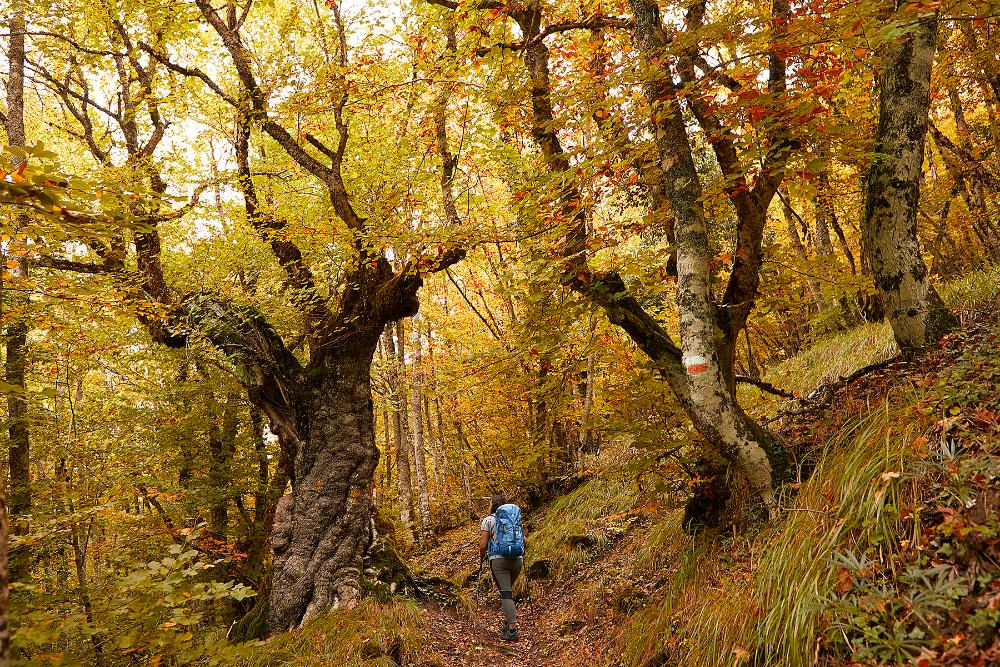
Easy trails for the whole family
There are routes designed for all types of visitors starting at Casas de Irati, alongside the entrance from Ochagavía:
- Path of the senses: A very accessible 2-km route with signs identifying the trees on the way.
- Zabaleta woods: 8 km to the Irabia reservoir.
These routes are perfect for families, schoolchildren and those looking to connect with nature without having to make too much of an effort.
-
Adventures for cyclists
The Irati forest is also a paradise for cycling. The Irati MTB centre has more than 400 km suitable for bikes, with signposted routes for all levels.
If you want a challenge, sign up for the Irati Xtrem (there’s a road bike and an MTB version), a non-competitive ride around the forest every autumn. And if you’d prefer something gentler, local companies offer e-bike rentals and guided tours, perfect for going around the reservoir or exploring the Abodi plateau.
-
Routes with stories and legends
The Irati forest is also full of stories. The Gartxot route, based on the legend of a famous Navarrese bard, starts in Izalzu and covers 12 km with some spectacular landscapes.
And on the border with France is the Arpea cave, an almost magical place where layers of rock seem to fold into an upside-down V shape. It’s about a 1-km walk from the car park. The cave is shrouded in legends, one of which claims that it was once inhabited by lamias (female mythological beings).
Practical tips for your visit to the Irati forest
-
How to get to the Irati forest
There are two main entrances:
- From Ochagavía (Salazar valley): to Casas de Irati (23 km).
- From Orbaizeta (Aezkoa valley): to the spot known as Arrazola (8 minutes by car).
Both are just over an hour from Pamplona. The approximate distance from Pamplona is 70 km (1h 15 min by car). Please note that in high season (especially autumn) and at weekends, access by car may be limited and subject to a fee (see the forest upkeep fee for vehicles), depending on the point of entry.
-
Where to eat in the area
Bear in mind that the natural beauty of the Irati forest attracts many visitors, so if you want to eat in a restaurant in the area, we recommend that you call to make a reservation.
-
Where to spend the night if you visit the Irati forest
There’s something for everyone:
- Campsites:
- Osate (Ochagavía)
- Urrobi (Espinal)
- Murkuzuria (Esparza de Salazar)
- Rural accommodation, hostels and hotels
-
Equipment and recommendations
- Comfortable clothing and mountain footwear.
- Water and something light to eat (services are limited in the forest).
- Helmet and basic bike kit if you’re going on two wheels.
- In autumn, get up early: it’s the most popular time of the year.
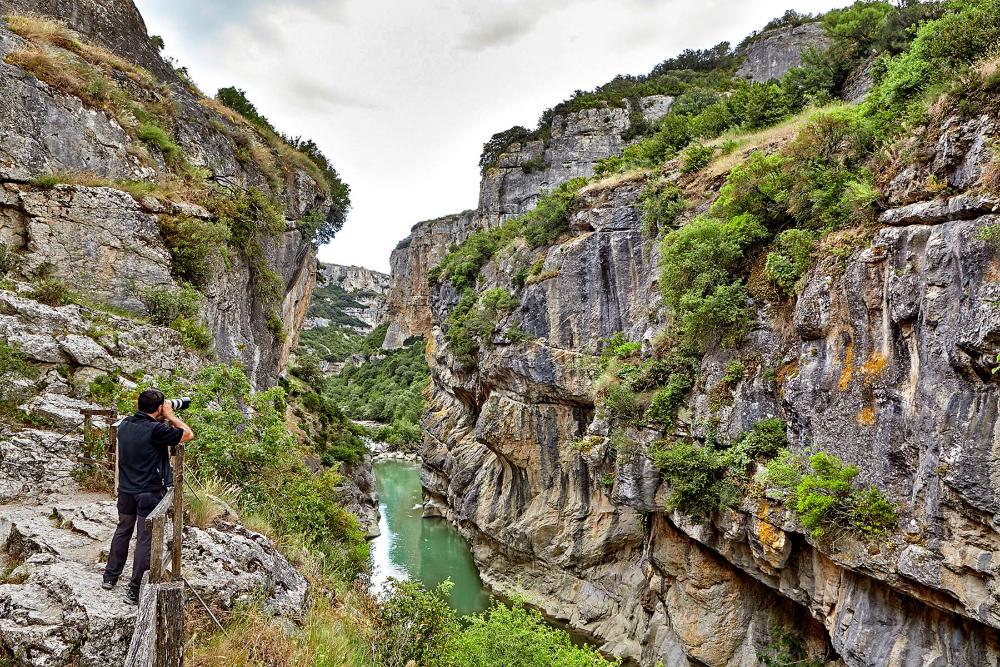
And with all this, you now have the ultimate guide to find out what to see in and around the Irati forest. A destination that has it all: nature, history, culture and routes for all tastes. And if you want to combine your visit with other parts of Navarre, nearby you have fascinating places like the beginning of the Way of St James in Roncesvalles and the largest bird of prey reserves in Navarre: the Gorges of Arbaiun and Lumbier.