
The French Way of St James: Estella-Lizarra - Viana
 Estella-Lizarra

From Estella leave Calle Curtidores by crossing the reconstructed Romanic bridge. We head into Calle de la Rúa, the pilgrims’ street and begin to see a little of its former life as a commercial street. We reach the San Martín plaza with its renascence “los chorros” fountain. The town’s Tourist Information Office can be found in the Baroque Palace. The former Romanesque palace of the Kings of Navarre is located on Calle San Nicolás, now home to a museum of the expressionist painter Gustavo de Maeztu. The San Pedro de la Rúa church is also located on this street, with its Romanesque cloister positioned in a unique setting.
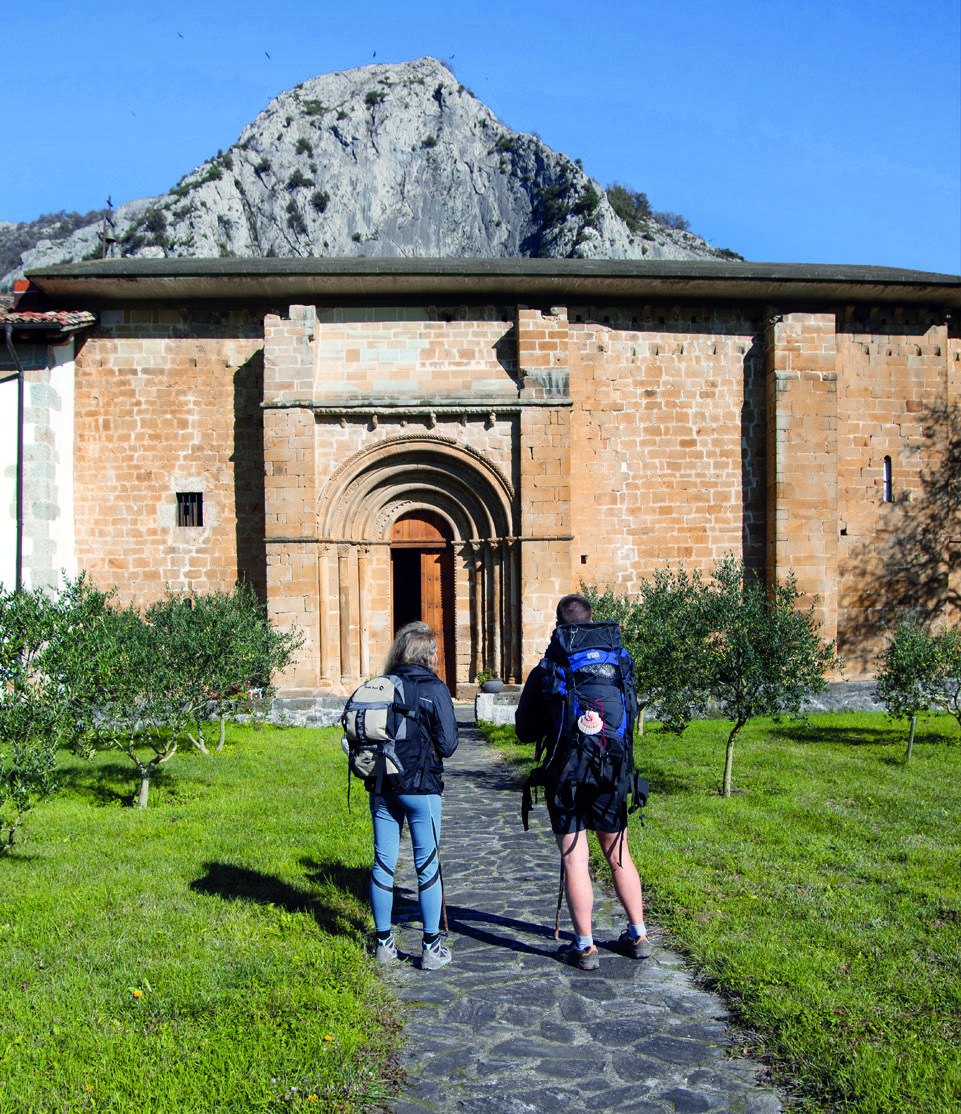
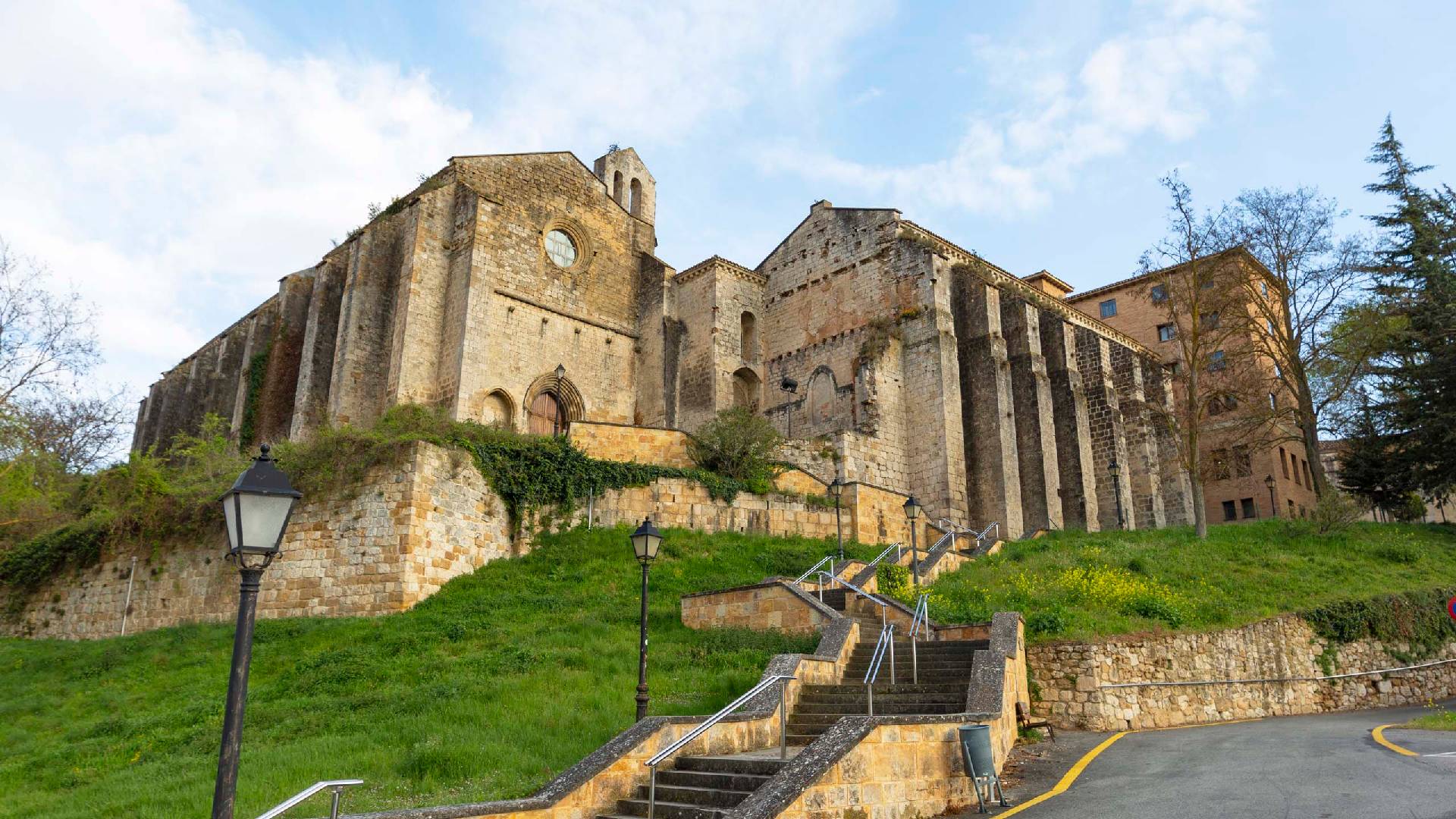
Just after leaving the city of the river Ega, we come across the Iratxe monastery. This monumental ensemble comprises mediaeval, renascence and baroque buildings. There is a very popular fountain located next to the monastery, where pilgrims can choose from one of its two spouts: on one side water and wine on the other.
After leaving the monastery behind, the Way splits into two branches. One goes to Villamayor de Monjardín passing through Ázqueta and the other goes to Luquin. The Santiago Way continues through Ázqueta and Villamayor de Monjardin. The route continues towards Villamayor de Monjardín. Two kilometres further on, we find the crossroads on the Urbiola road.
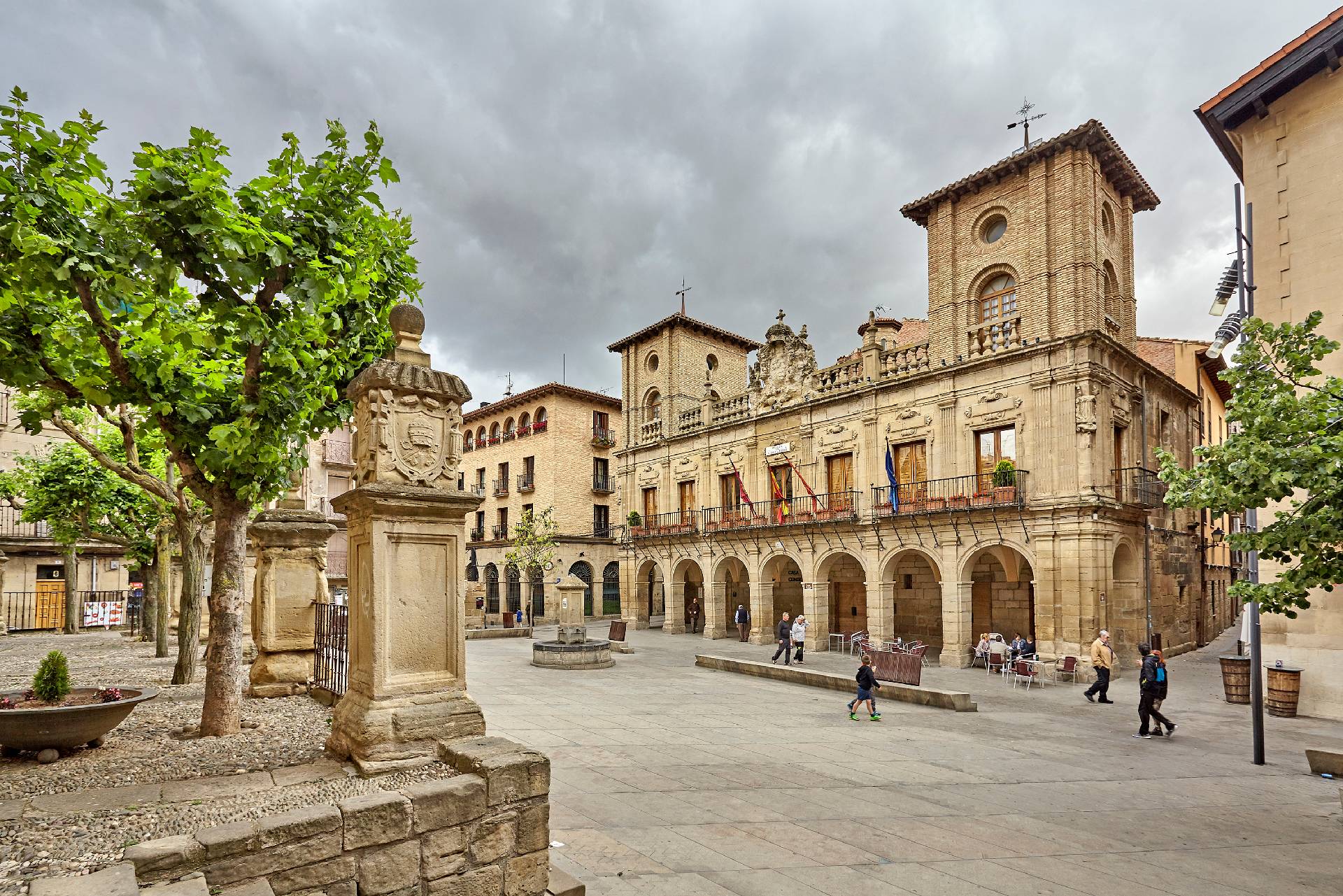
We enter Los Arcos via Calle Mayor. Discover its mediaeval town centre and the former pilgrims’ hospitals, today converted into more modern hostels. Carry on till you reach the porticoed square of Santa María, and visit the church that shares its name. Leave the town through the Castilla portal, which resembles the Arc de Triomphe, an indisputable example of the splendid past of this town. After crossing the road and the river Odrón, continue down a farm track and follow the directions that will take you to the Sansol road, and up to the village of the same name. A rapid descent takes us to Torres del Río. Is a welcoming town with narrow streets, where you can see large Baroque homes with decorative escutcheons. Do not leave without discovering the treasure in the lower part of the village: the Santo Sepulcro church. Discover the 12th century octagonal temple, which was once a beacon for pilgrims and which is reminiscent of the Jerusalem basilica. Once inside, look up and enjoy the starred vault, of Caliph origin, similar to that of Eunate. From the church, the trail ascends to the top part of the village, and continues to climb till it reaches the Virgin of Poyo hermitage. The next kilometres are somewhat challenging but well worth the effort, because at the end of the route the monumental Viana awaits us.
_2022020910000311.jpg.jpg "grupo de personas delante de la ermita de Santa María de Eunate")