

12 dic, 2025
Olentzero: history, tradition and experiences for a family Christmas
Olentzero is a jolly charcoal-burner who, on the night of the 24th of December, comes down from the mountains accompanied by his donkey, laden with gifts to announce the arrival of Christmas. Experiencing Christmas in Navarre with him is like going back to when everything began, to the songs passed down from generation to generation and to the excitement of children eagerly awaiting the charcoal-burner's arrival. We’re going to tell you who he is, why everyone loves him so much and, above all, where you can live his magic as a family in authentic experiences, towns and villages that fully embrace the tradition, and places where the kids can get to see this endearing character, their faces alight with excitement.
BlogWho is Olentzero? The living legend of Christmas in Navarre
Olentzero is one of the most beloved figures of the Navarrese winter. He is associated with the earth, fire and woodland. He represents the winter solstice, the rebirth of daylight and the arrival of a new year.
The origin of Olentzero: mythology, forests and ancient legends
The most popular legend, closely tied to mythology, has it that in the Aralar mountains, the jentilak (wise giants who inhabited this land before humans did) caught sight of a great light in the eastern sky. The eldest among them said, "Oh, my children! Kixmi has been born. Our time is over. Throw me off this cliff!" By Kixmi, he meant Jesus. The jentilak obeyed. After that, they all vanished bar one, who decided to go down to the villages to announce Kixmi’s arrival to the villagers. That jentil was Olentzero. That's why some stories describe him as the last of the jentilak.
Another story says that, before leaving, the jentilak left behind a human child to watch over the village. And that boy was Olentzero.
He grew up to become a charcoal-burner who lived in the mountains and spent all his time making charcoal and observing the heavens. On the 24th of December, he would go down to the valley to announce the arrival of the solstice and the return of daylight. This version is backed by the theory that his name comes from Onentzero or Onenzaro, the "time of good things” in Basque.
The metamorphosis of Olentzero: from the mountains to the streets of Navarre
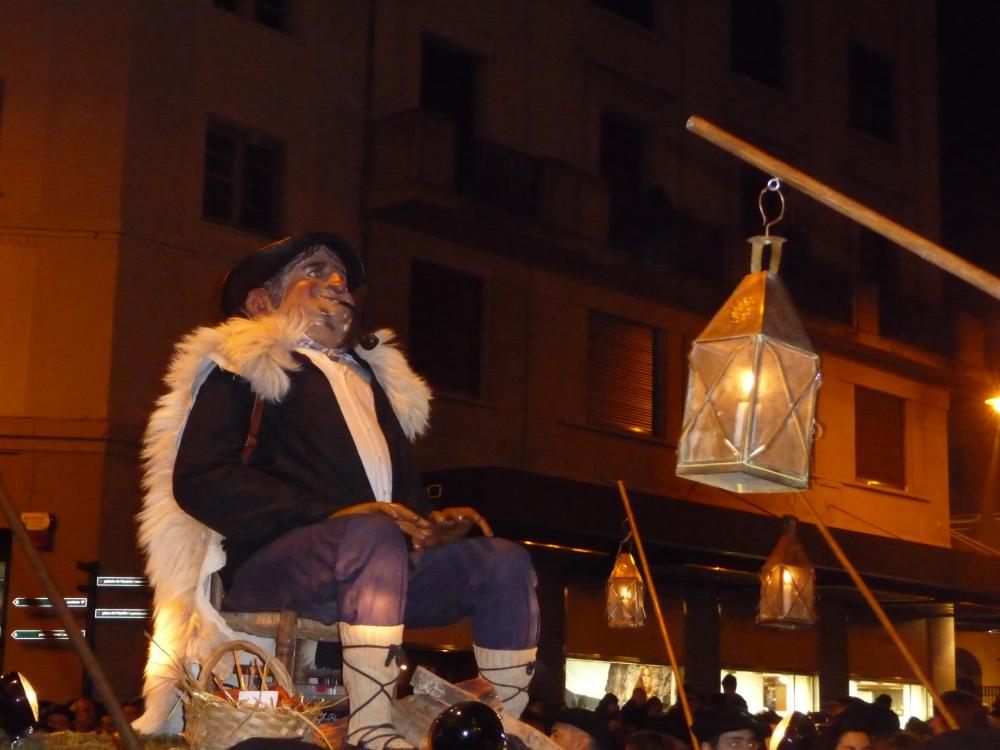
For centuries, Olentzero was a rugged and almost mysterious figure, a mixture of guardian and messenger. Over time, his image changed and softened to become the affectionate character we know today: a burly, good-natured, generous man who passes through our towns and villages after sunset on the 24th of December with his donkey, its saddlebags overflowing with gifts.
Today, thousands of families eagerly await his arrival every year in kalejiras (street parades), processions and celebrations full of music, carols, dances, lights and children's beaming faces. In addition to sweets, it's traditional in some places to share out wine, hot chocolate and roasted chestnuts, ideal to combat the cold Navarrese winter!
Mari Domingi: who she is and what role she plays in Christmas in Navarre
In recent years, Olentzero has been accompanied by Mari Domingi, a figure created to balance, update and enrich our Christmas traditions.
Dressed as a peasant woman wearing a traditional buruko (head wrap) on her head, Mari Domingi represents the rural world, farm work and popular culture. Like Olentzero, Mari Domingi is linked to the winter solstice and the rebirth of life, but she does so from a more domestic and family-centred perspective. Together they convey values of amiability, equality and tradition, and form a beloved duo for families here.
Where to see Olentzero in Navarre: traditions you shouldn't miss
In Navarre, each town and village celebrates Olentzero's arrival its own way, making the experience unique.
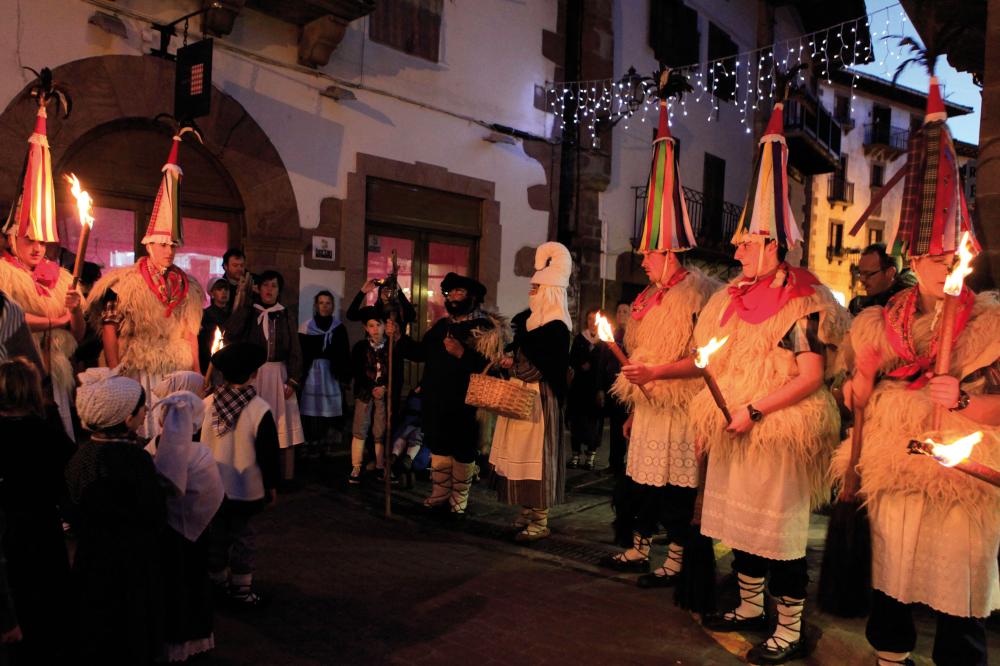
On the afternoon of the 24th of December, kalejiras fill the streets with the music of txistus (Basque fipple flutes) and dulzainas, dancing, storytelling and Christmas carols. Each place has its own traditions, but it's common for Olentzero to arrive with Mari Domingi:
- in a cart pulled by a donkey or a tractor,
- accompanied by children singing
- or even coming down from the mountainside.
Traditionally, the Olentzero parades featured a crude dummy dressed in old clothes and blackened with soot to represent:
- the old part of the year,
- the negative things that needed to be purified
- or the mythological figure returning to the mountainside after "fulfilling his mission”.
The tradition of Olentzero being represented by a dummy lives on in several towns and villages:
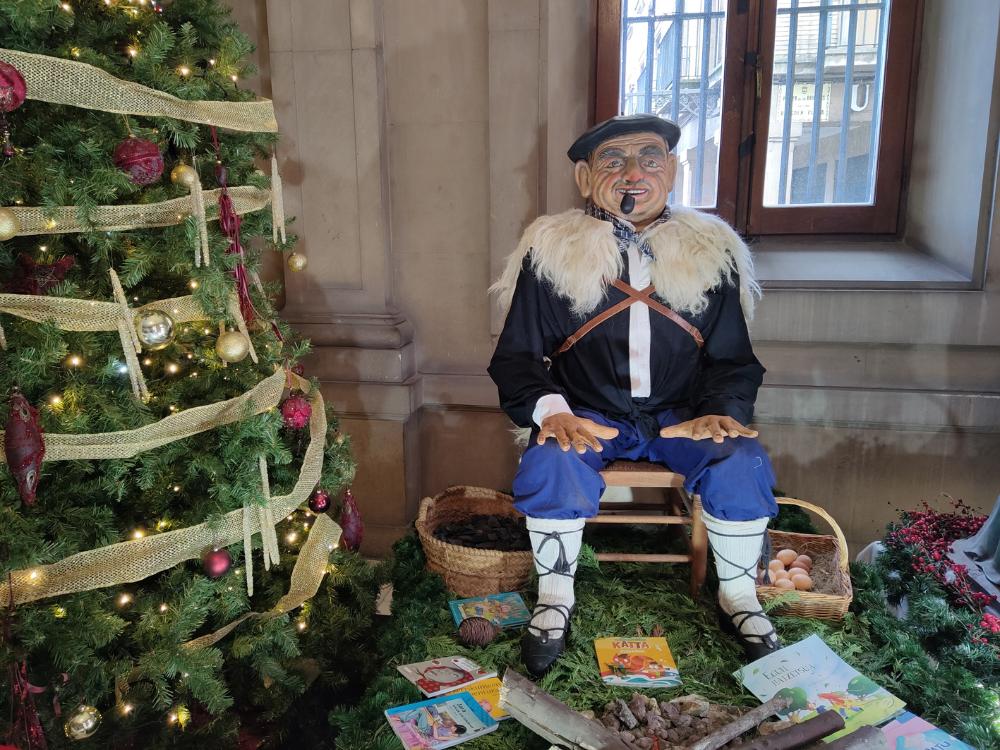
Lesaka
One of the most emblematic towns in which to see Olentzero’s arrival is Lesaka, where it is a particularly deep-rooted tradition. Indeed, Olentzero is considered to come from there.
The origin of Olentzero in Lesaka is linked to pre-Christian end-of-year rites, when rural communities celebrated:
- the return of daylight after the solstice,
- protection of the home
- and abundance for the new agricultural cycle.
In these rituals, a rustic character, associated with the mountains and fire, would often appear—hence his representation as a charcoal-burner—, symbolising the end of the dark year and the arrival of a new one.
In the past, the dummy was paraded through the town and, in some cases, burned as a symbol of renewal. This wasn't always the case, but the idea of rebirth and closing the annual cycle is very present in the Lesaka tradition.
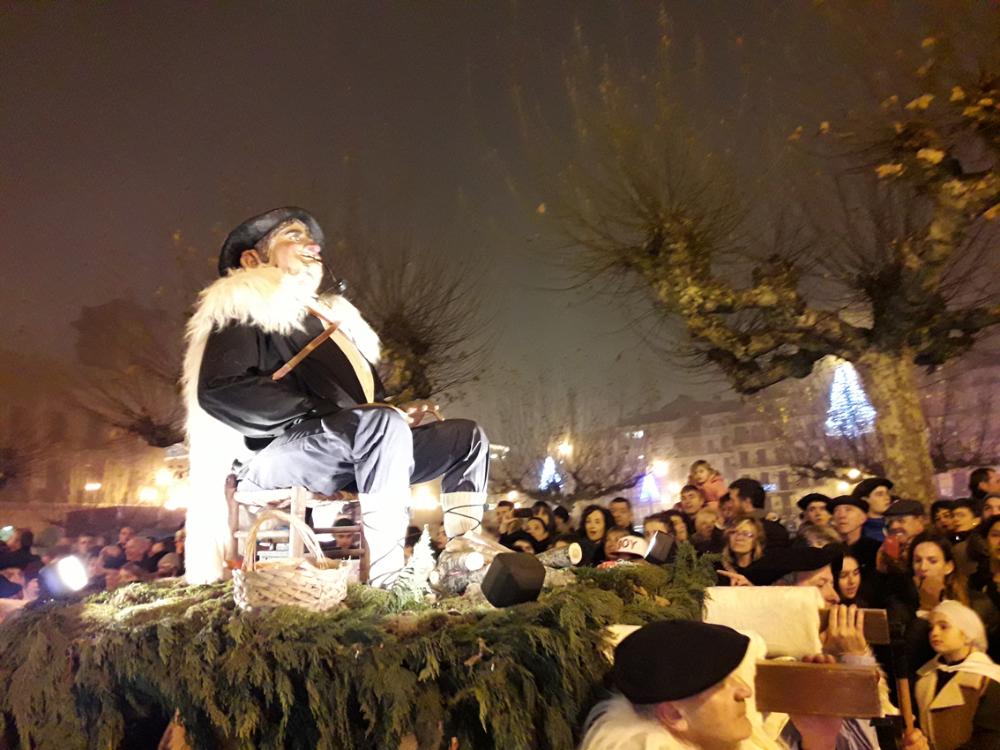
Pamplona
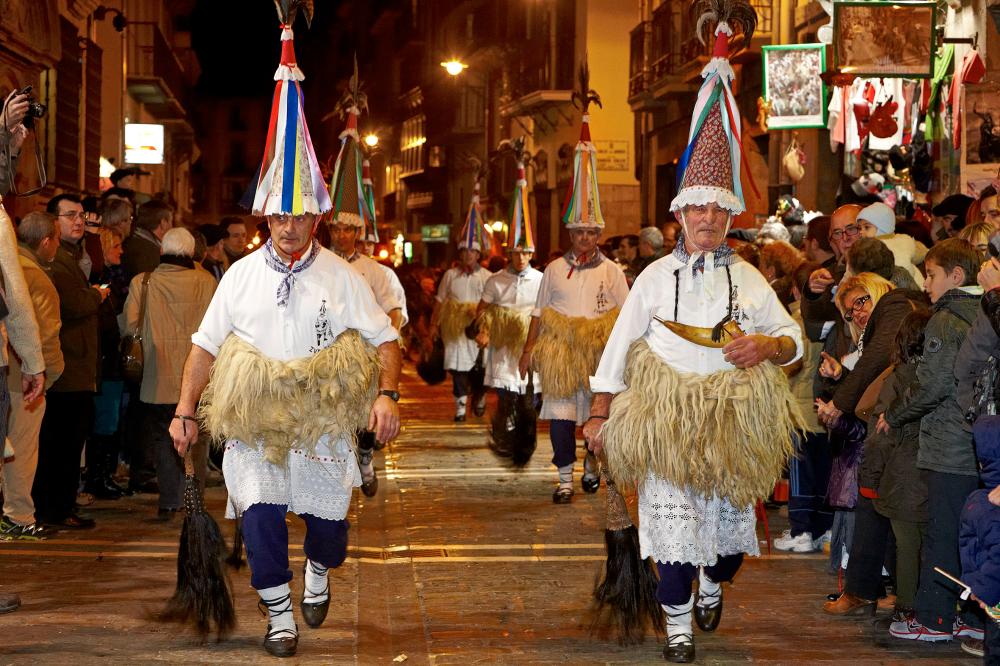
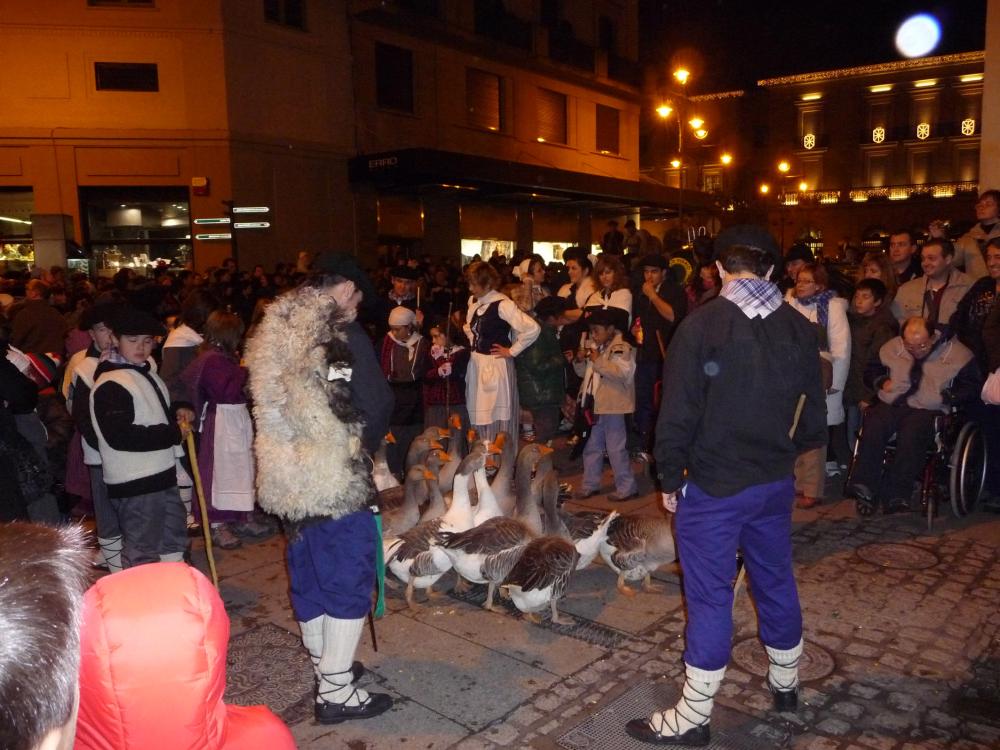
The Olentzero parade in the capital usually takes place at 6 p.m. on the 24th of December, starting from the School of Arts and Crafts. Music, singers, hundreds of animals and joaldunak (men in traditional carnival dress with cowbells strapped to their backs who stomp to make them ring) all take part. At 7.30 p.m., the entourage arrives in the square in front of Pamplona city hall, where it is received by the council and the city’s brass band, La Pamplonesa.
Tafalla
The kalejira usually begins at 6 p.m. from Plaza de Navarra (although the location can change) and continues along the main streets in the centre of the town. It typically includes txistularis (Basque fipple flute players), brass ensembles, children dancing and the traditional Olentzero figures made by students. On the way, sweets and mulled wine are handed out, creating a festive and family-friendly atmosphere. To bring the proceedings to an end, the youngest dancers put on a performance. The partying continues in the town's streets and bars.
Olentzero songs: the soundtrack of December
In Navarre, Christmas is celebrated to the sound of "Olentzero buru handia…” (Olentzero big head...), children's choirs and lyrics that tell the story of where Olentzero is from.
The etymology of Olentzero is interesting because one of the older forms of his name was Olentzaro, which could be translated as "time of the greetings", the time of song.
Each valley has its own tunes, some more joyful, others more solemn. Hearing them being sung during a kalejira is a highly cherished moment at this time of year.
Christmas experiences to enjoy Olentzero in Navarre
Besides the usual processions and kalejiras, there are other great ways for families to enjoy Olentzero in Navarre, give him their Christmas wish lists and discover the tradition from within.
Here's a short list of places where you can truly live the experience:
1. Basabere (Lezáun): visit Olentzero and Mari Domingi
An ideal day out for families with young children. At this farm school, Olentzero and Mari Domingi welcome visitors, accept their wish lists and explain how they live in the mountains. There are also animals, workshops and beautiful surroundings. It's possible to stay for lunch, but it’s a good idea to book in advance.
2. Ultzama school farm: Christmas in the heart of nature
Located in the Ultzama valley, this farm offers themed activities, storytelling and the chance to meet Olentzero. The perfect way to learn, have fun and spend an unforgettable day. Meals are also served.
3. Xuberoa school farm: traditions for little explorers
A great way to deliver your wish list to Olentzero, learn traditional stories and enjoy rural activities in an extremely Navarrese setting.
4. Haritz Berri school farm (Ilundáin): workshops and Christmas visit
In a privileged natural environment, you have the chance to meet Olentzero and Mari Domingi, and take part in family workshops and educational activities to discover the rural world.
5. Gure Sustraiak school farm (Ollo): nature, stories and Christmas magic
This farm offers family days out with workshops, activities and, depending on the dates, themed days centring on Olentzero and Mari Domingi.
6. Naturalia school farm (Esquíroz): a magical family experience
Olentzero comes to the farm to collect the children's letters. The visit includes a guided tour of the facilities and ends with the kids meeting Olentzero so they can give him their letters in a special, cosy atmosphere.
How to prepare for coming to enjoy Olentzero in Navarre
If you're planning to experience Olentzero's arrival with your family, take note of these tips:
- Check the times and dates in advance. The parades and activities change every year.
- Book farm experiences well in advance. They tend to fill up quickly.
- Bring warm clothes. In Navarre, December is usually cold and it’s even colder in some valleys.
- Check the official Navarre Tourism website to confirm activities and events.
- Wear comfortable clothing and suitable footwear, especially if you're visiting rural areas.
- Enjoy things at your own pace. The magic of Olentzero consists of taking your time to savour each moment.
Remember: Olentzero isn’t just a character but a symbol of magic, tradition, identity, the solstice and good hope, heralding the arrival of the "time of good things”. So, if you're planning a getaway in December, Navarre is the perfect place to experience the magic of Christmas and its traditions.