
09 jun, 2026
Ernest Hemingway in Pamplona: his love story with the San Fermín festival and the literary route
Any idea who we’re talking about if we tell you he went by the nickname ‘Papa’? And what if we told you that his presence at the San Fermín festival contributed hugely to the worldwide fame the event later gained? We are indeed talking about Ernest Hemingway, the American journalist and writer.
BlogIf you want to follow in Hemingway's footsteps through Pamplona and discover all the locations that shaped his story and passion for the fiesta, read on. The Ernest Hemingway route and his favourite places in Pamplona await you!
Ernest Hemingway in Pamplona and the San Fermín festival: the origin of the legend
Ernest Hemingway and Pamplona go hand in hand, as do Hemingway and the San Fermín festival. Do you know how the spark ignited between the American and the festival? Don your red neckerchief, immerse yourself in the festivities and discover the origin of their partnership.
When did he first come here? The centenary of a literary romance
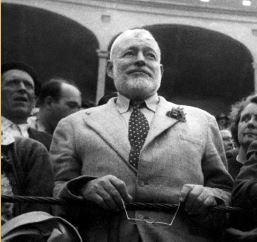
Ernest Hemingway visited Pamplona for the first time in 1923. At that time, he was working as Paris correspondent for The Toronto Star Weekly and travelled to Navarre driven by his personal interest in bullfighting (that spring he had already visited Spain to see other bullfights). Upon arriving in the Navarrese capital, he was captivated by the lifestyle here—so emblematic of the city’s identity—, the intense atmosphere, the passion for bullfighting and all the spontaneous interactions around him. His wife at the time, Hadley, accompanied him on this first trip.
In October of that same year, the Star published an article by the writer recounting his first taste of the Pamplona bullring. His experiences in Pamplona in 1925 gave rise to the novel The Sun Also Rises, published in 1926. It was his first novel and marked a turning point in his career. After that, he wrote more about bullfighting, Pamplona and the festival in his non-fiction book Death in the Afternoon (1936), incorporating the technical knowledge acquired from the bullfights he enjoyed attending in Spain and France.
How Hemingway transformed the image of the festival
Hemingway’s arrival in 1923 changed everything. He was so captivated by the city and the festival that he travelled to Pamplona nine times, accompanied by friends, reporters and even some of his subsequent wives. In addition to leaving a lasting record of his love for bullfighting, there can be no doubt that his writings, and particularly the vivid personal experiences that culminated in The Sun Also Rises, were instrumental in propelling the San Fermín festival to the status it now enjoys.
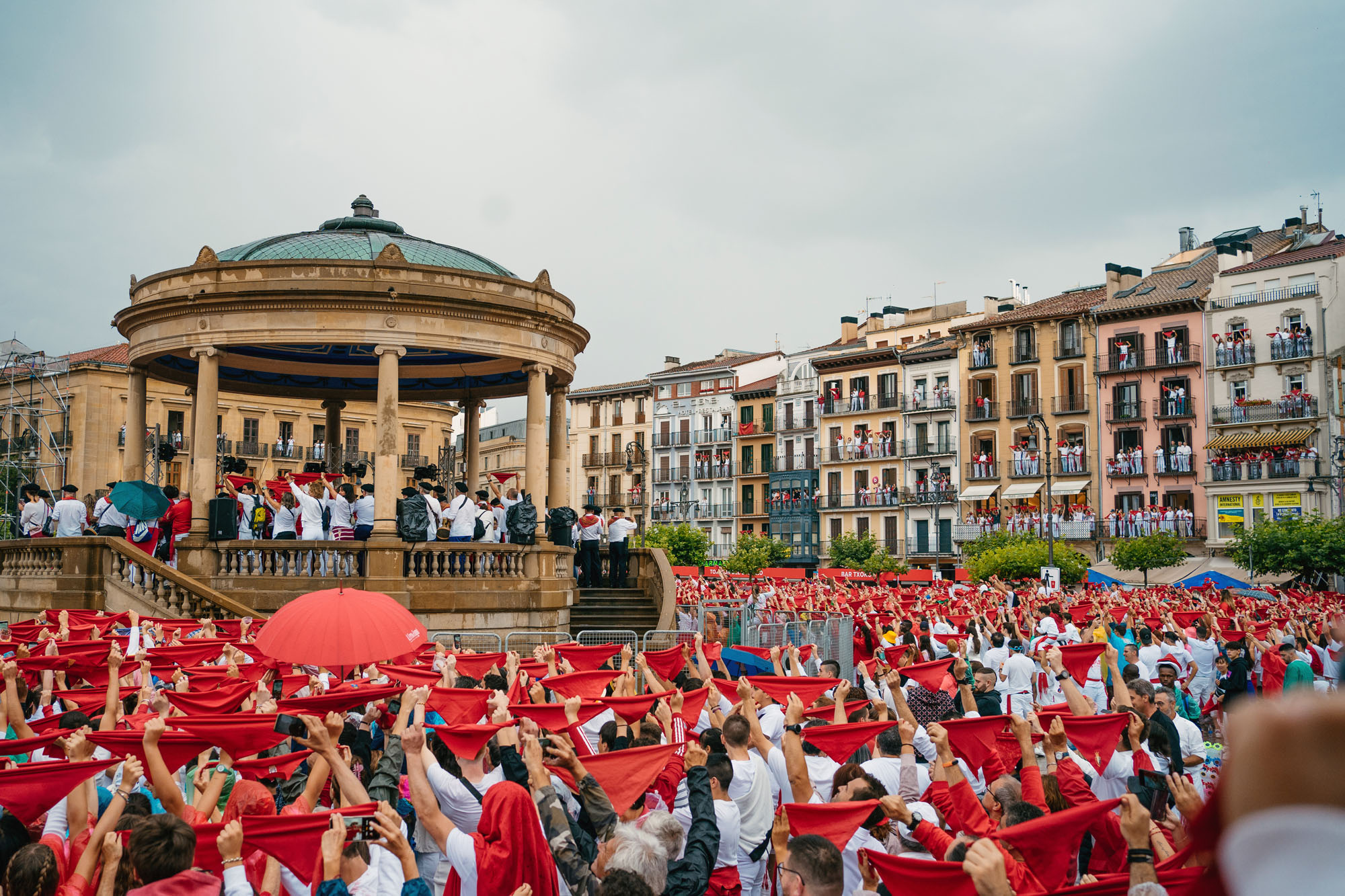
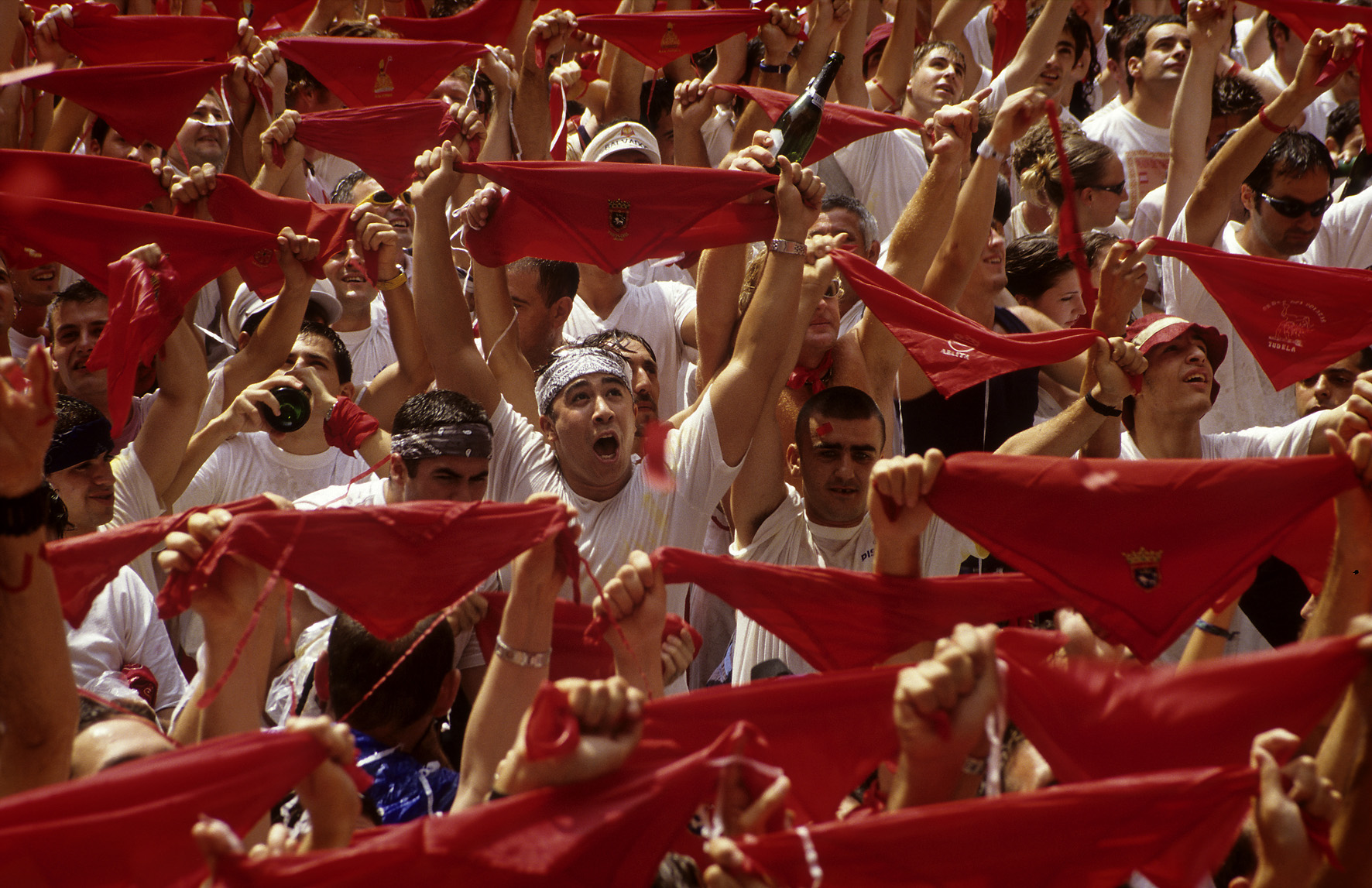
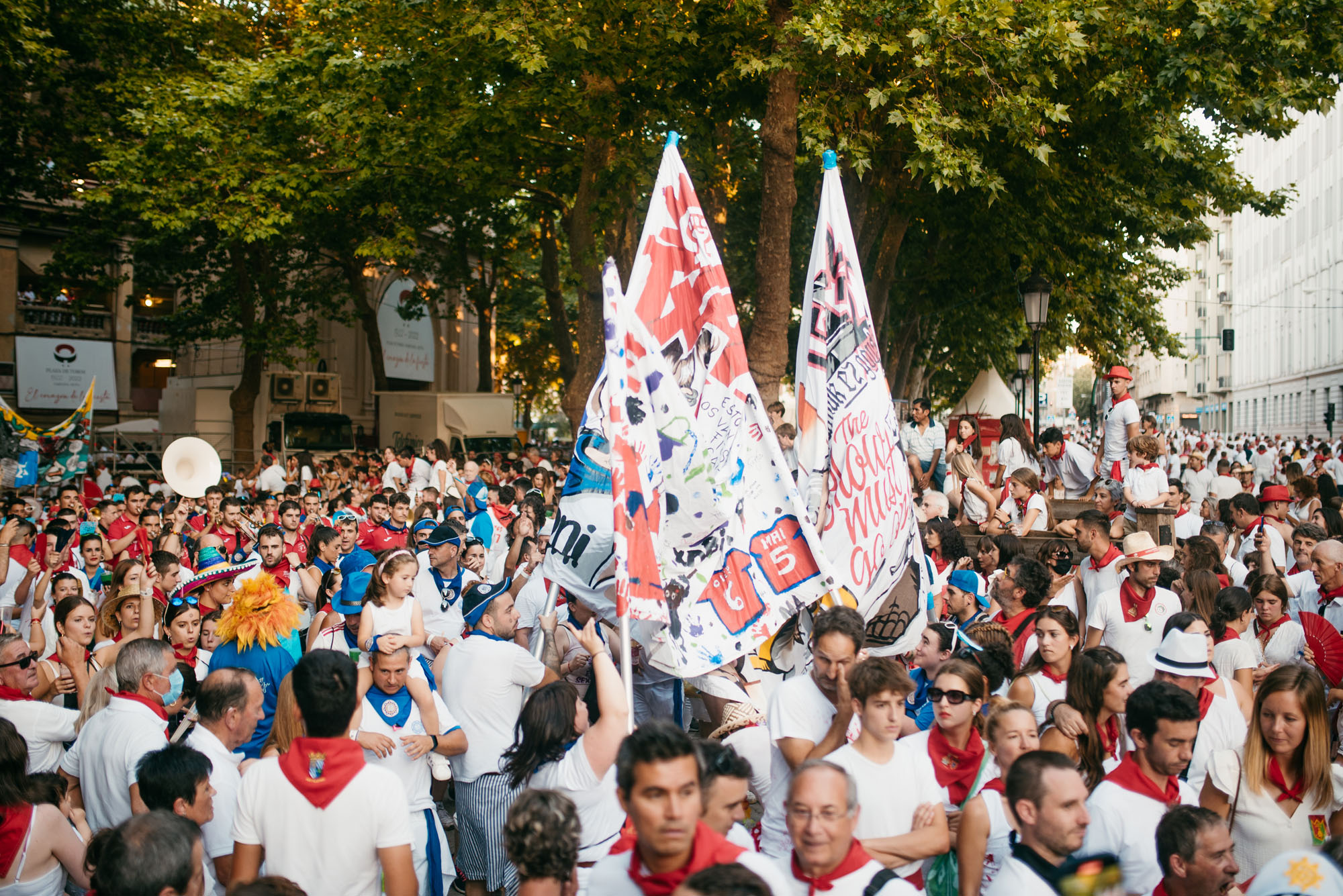
After the book was published and with the rise of tourism in the 1950s, the festival began to change, and Pamplona started receiving visitors from all over the world who wanted to experience ‘Hemingway's San Fermín festival’, to the point that the city became something of a literary myth. The white outfit and the red scarf struck a chord, and the festival's more pagan spirit eclipsed the religious events.
Hemingway not only recounted the San Fermín festival; he reinvented it for the world. If you want to find out more about the writer’s time in the city, the Pamplona-born writer Miguel Izu published the book Hemingway in Pamplona in 2021.
In June 2023, the centenary of his first visit, Pamplona City Council organised a programme of cultural activities to pay tribute to the writer and his connection with the festivities.
La ruta de Ernest Hemingway en Pamplona: dónde ver su huella
The Ernest Hemingway route in Pamplona: follow in his footsteps
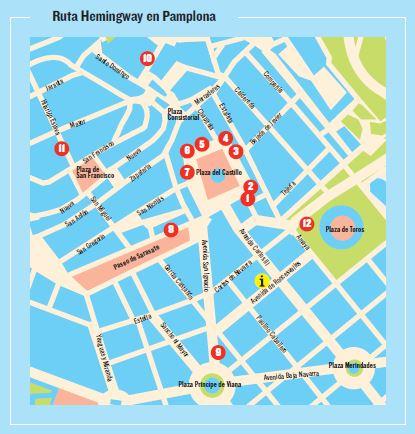
The influence of Ernest Hemingway, winner of the 1954 Nobel Prize in Literature, is present throughout the city of Pamplona. There's even a route taking in twelve emblematic spots to explore his favourite haunts; the perfect way to spend a weekend and relive the experience. Are you familiar with the twelve must-see highlights on the Hemingway route? Take note:
1. Bar Txoko
2. Hotel Quintana
3. Café Bar Torino
4. Hotel La Perla
5. Café Iruña
6. Café Kutz
7. Café Suizo
8. Former Restaurante Las Pocholas
9. Hotel Yoldi
10. Former Casa Marceliano
11. Former guesthouse on Calle Eslava
12. The bullring
Here are some of the key locations so you can experience the Hemingway route through these pages.
The bullfighting circuit: the alley into the bullring and statue to the writer
If there was one thing Ernest Hemingway loved, it was bullfighting. He enjoyed watching the running of the bulls from the balconies of Calle Estafeta and attended both full-blown bullfights and novilladas (bullfights with young bulls).
Pamplona was the Nobel laureate’s bullfighting sanctuary. His special friendship with Juanito Quintana, owner of Hotel Quintana, opened the doors to the world of bullfighting for him. Hemingway always defended bullfighting as an art form and a symbol of Spanish culture.
He admired Antonio Ordóñez, son of Niño de la Palma, with whom he maintained a close friendship. In The Dangerous Summer, he narrated the rivalry between Antonio Ordóñez and Luis Miguel Dominguín, again demonstrating his passion for bullfighting.
El Paseo de Hemingway (Hemingway Promenade) in Pamplona runs, as one would expect, alongside the bullring.
Just before descending the alley into the bullring, we come across the statue that Pamplona City Council erected posthumously in Hemingway's memory in 1968.
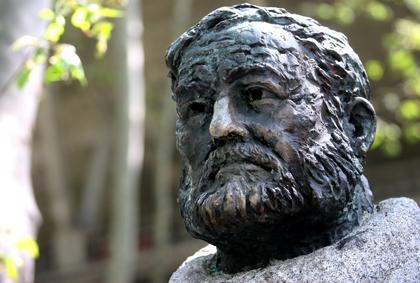
On 6 July 1986, after the skyrocket to kick off the San Fermín festival was launched, the statue was celebrated in the presence of Hemingway's widow, Mary Welsh. At the event, the city’s brass band, La Pamplonesa, played the national anthems of the United States and Spain. The municipal txistularis (Basque fipple flute players) then performed Agur Jaunak. It was a moving ceremony that drew a large crowd. The plaque on the statue reads as follows (in both Spanish and Basque):
‘Ernest Hemingway. Nobel Prize in Literature. Friend of this city and admirer of its festivals, which he described and popularised. The City of Pamplona. San Fermín 1968"
Iconic hotels for Hemingway in Pamplona
Hemingway spent hours in different hotels in Pamplona, soaking up the atmosphere, taking notes for his articles and talking with bullfighters and other important figures in the festival. Here are the three hotels that Hemingway visited when he wanted to enjoy the San Fermín festival:
1. Hotel La Perla: for his first trip to Pamplona, Hemingway initially booked a room at Hotel La Perla but didn't stay there in the end because it proved too expensive. Ignacia Erro, the hotel's owner, found him a more affordable alternative at a guesthouse on Calle Eslava, where he eventually stayed with Hadley.
It would seem that he finally managed to stay at La Perla in 1953 with his wife, Mary Welsh, although other accounts say they lodged at the Ayestarán Hotel in Lekunberri that year.
2. Hotel Yoldi: a hotel Hemingway frequented to meet up with Antonio Ordóñez. During the 1950s, this hotel became the preferred lodging for bullfighters after Hotel Quintana closed in 1936.
3. Hotel Quintana: between 1925 and 1931, Hemingway and his friends stayed at the now-defunct Hotel Quintana. It was owned by Juanito Quintana, a close friend of Hemingway’s, with whom he shared a passion for bullfighting and republican ideals. So much so, in fact, that it served as inspiration for his novel The Sun Also Rises, in which both the hotelier and his establishment are referred to as Montoya.
Ernest Hemingway's cafes and get-togethers in Pamplona
For Ernest Hemingway, a great way to enjoy the San Fermín festival was to spend his time with locals from Pamplona, the typical young men who enjoyed the bullfights, the running of the bulls and the general revelry.
The Hemingway route includes the cafes and bars that he frequented most, some of which are still open today.
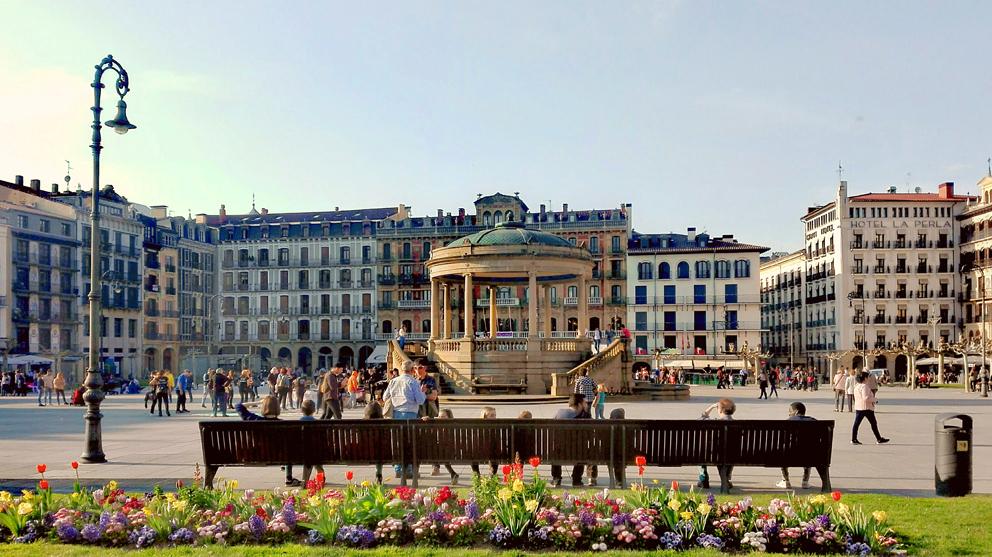
- Café Iruña in Plaza del Castillo. For Hemingway, Café Iruña was the ideal vantage point from which to enjoy the festival. From this establishment, still located at the same address (Plaza del Castillo, 44), he could watch the giants and roisterers, and enter into engaging conversations with everyone in the cafe. In The Sun Also Rises, Café Iruña is mentioned several times as ‘the cafe’ or ‘the cafe on the square’.
- In the 1950s, what is now Bar Txoko was called Bar Choco, and that's the name Hemingway knew it by. Located in the same spot as it is today, on the corner of Plaza del Castillo and Calle de Espoz y Mina, the novelist spent hours on the terrace there.
- Another bar he frequented was Café Bar Torino, now Torino Berria, next to Hotel La Perla. Hemingway must have found it amusing that the bar had an Italian name, so in his novel he changed it to another Italian city: Bar Milano.
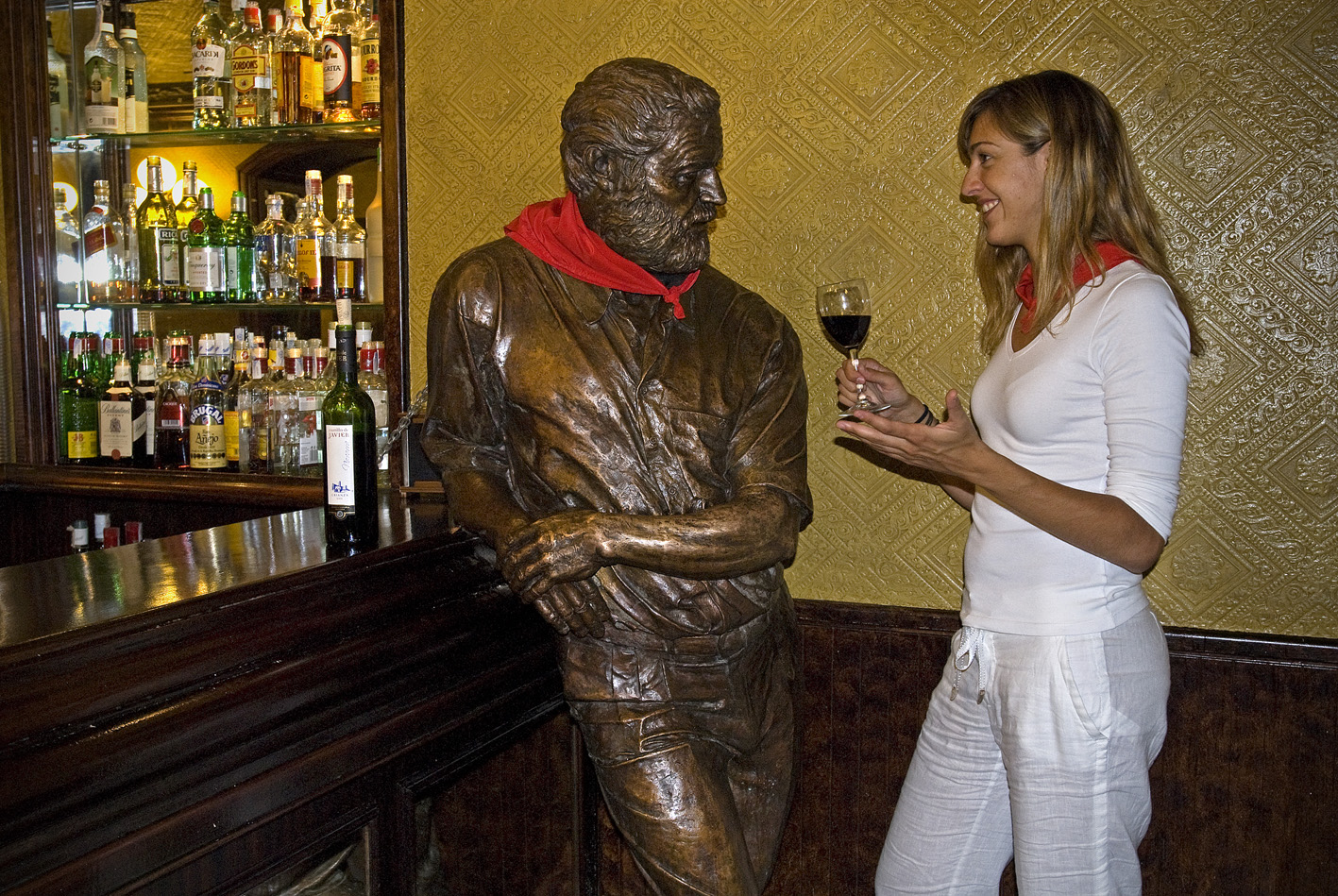
- Casa Marceliano, one of Pamplona’s classic tascas of yesteryear. This establishment closed its doors in 1993, but until then it was that quintessential dimly lit bar pouring local wine which had wood everywhere. In his book The Dangerous Summer, Hemingway writes about Casa Marceliano: ‘..Marceliano’s where the wood of the tables and the stairs is as clean and scrubbed as the teak decks of a yacht except that the tables are honorably wine-spilled. The wine was as good as when you were twenty-one, and the food as marvellous as always.’
- Restaurante Las Pocholas on Paseo Sarasate. This restaurant was run by nine sisters, the Guerendiáins, from 1934 until it closed in 2000.
- Café Kutz, located next to Café Iruña at number 43 Plaza del Castillo, was also one of the writer’s favourite haunts.
- Café Suizo, at number 37 on the square, hosted Hemingway on many occasions until its closure in 1952.
Plaza del Castillo was Hemingway's main meeting place. It was the hub of cafes, hotels and social get-togethers that defined his bond with the city. Plaza del Castillo was, and continues to be, a popular meeting point for enjoying the city and its festivities.
As you can see, the Hemingway route in Pamplona is more alive than ever. Ready to explore it and feel part of this story?